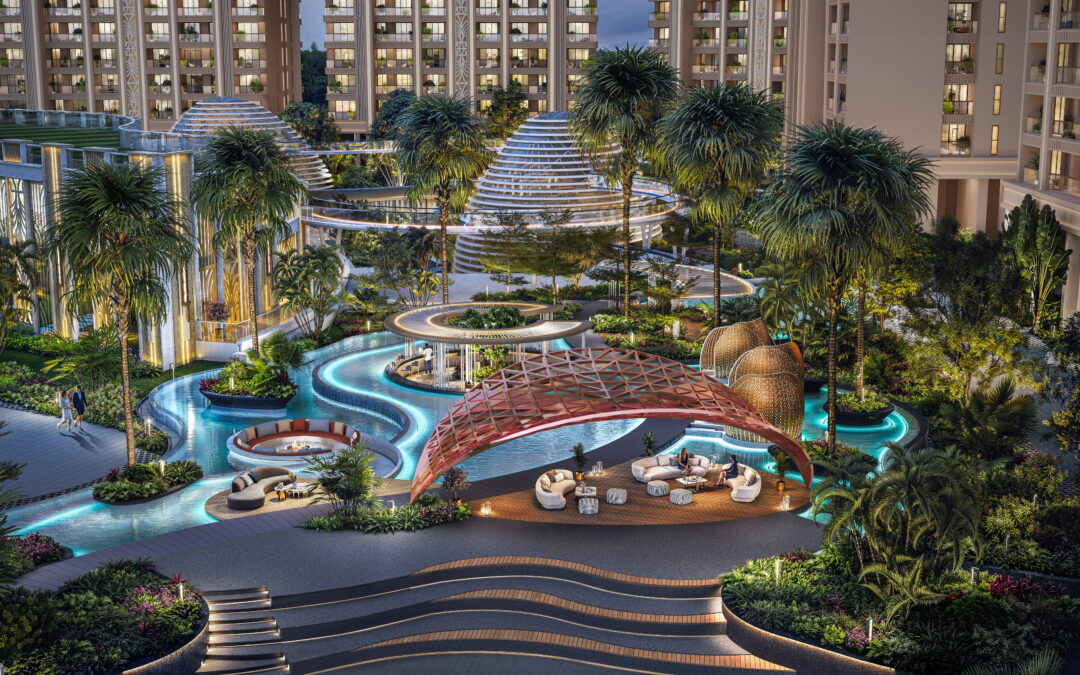
Whiteland Corporation’s foray into hospitality branded residences marks a bold redefinition of luxury living. Sudeep Bhatt, Director Strategy, Whiteland Corporation talks about the rationale behind partnering with Westin and the distinct value of branded residences, and how design, service and community engagement are reshaping premium residential experiences in India, in a conversation with IWOH News magazine.
 What was the strategic rationale behind Whiteland choosing a hospitality-branded residence model over a conventional luxury residential development, and what does the partnership with Westin enable that a traditional residential model cannot?
Whiteland’s choice of a hospitality-branded model for Westin Residences represents a paradigm shift from delivering only square footage to offering a curated, wellness-led lifestyle. By collaborating with Marriott International, Whiteland transcends the limitations of a traditional premium home to provide the ‘Westin Edge’ – a seamless integration of global service standards into daily living.
This partnership enables exclusive services like signature nutritional dining, private chef experiences, and global owner benefits that conventional residential models cannot replicate. It transforms the home into a social anchor, providing resident well-being and prestige through a world-class service-driven sanctuary.
From an investment and hospitality-development perspective, what are the key factors that make a location or destination conducive to a successful branded-residence project, and how do you assess the long-term potential of a market before committing to an investment?
A successful branded residence project is fundamentally driven by a location’s economic resilience, infrastructure expansion, and end-user demand. Key factors for a conductive destination involve being part of a diversified urban economy and having access to global capability centres and business hubs, which attract both institutional and diaspora capital.
For Whiteland Corporation’s Westin Residences Gurugram offers a strategic advantage due to its mature ecosystem and proactive regulatory environment. Ultimately, a conductive location balances high-end connectivity to airport, Delhi, Jaipur, UER2 with the brand equity offered by global hospitality leaders, ensuring sustainable value and elite lifestyle quality.
 How do you differentiate a branded residence, a serviced apartment and a conventional luxury residential project from an operating-model and customer-value perspective?
Branded residences define premium standards by merging permanent homeownership with a recognised brand’s operational excellence. The nature of this segment transcends the temporary nature of serviced apartments of conventional high-end residential projects.
While traditional models focus more on square footage, branded residences integrate a wellness-led operating model featuring curated F&B, signature concierge services, and impeccable architecture. The customer value lies in brand equity and lifestyle prestige, especially in resilient markets like Gurugram.
How closely will the residential service model mirror Westin’s hotel operating standards—including service protocols, employee training, quality audits and guest-experience benchmarks—and where will the model intentionally differ?
A lot of what makes Westin what it is the service standards, the training, the way quality is audited and the guest-experience benchmarks we’re bringing that over pretty much as it is. That’s the whole reason this partnership makes sense in the first place.
But where we’ve pulled back a bit is in how the service actually feels day to day. A hotel guest is there for two or three nights; they want to be catered to constantly. Someone living here, that’s their home, so the service has to be there when they need it without hovering.
And an important part of adapting that model to residences is Westin’s focus on wellness living. Here, wellness isn’t something residents experience occasionally; it becomes part of their everyday lifestyle, from the way spaces are designed and services are delivered to the experiences and routines that support physical and mental well-being.
So think of it this way: the standards are Westin through and through, but how they’re delivered has been reworked for people who aren’t just visiting—they’re living their everyday lives here, with wellness and well-being built into that experience.
 Beyond being an amenity, what role do you expect F&B to play in the project’s revenue strategy, resident engagement and creation of a broader hospitality-led community?
For us, F&B was never meant to be just another amenity on the list; it is actually going to shape how the whole community lives and interacts. A good café or restaurant space keeps residents around instead of them heading out every time they want to grab a bite, while also bringing in people from outside, which opens up an additional revenue stream for the project.
We have also brought in a specialised F&B consultant to forecast emerging food and beverage trends over the next four to five years. This helps us plan the F&B offering not just for what works today, but for how resident preferences and consumption patterns are likely to evolve in the future.
But beyond the numbers, it is really about creating those everyday moments — a Sunday brunch, running into a neighbour over coffee, or meeting friends for dinner. Those are the experiences that actually build community. Get this right, and the project stops feeling like just another address and starts feeling like a lifestyle people genuinely want to be part of.
From a demand-generation perspective, who is expected to be the core customer segment: end-users, HNIs, NRIs, investors, corporate buyers or a combination of these? How does the proposition differ for each segment?
Honestly, we’re not building this for just one type of buyer, it’s really a mix. End-users are the core, people who want that everyday hospitality experience right where they live. But we’re also seeing a lot of interest from NRIs, who love the idea of a managed, lifestyle-driven property they don’t have to worry about when they’re not around.
Investors come into the picture too, mostly because a strong F&B and hospitality layer adds to the property’s long-term value and rental appeal, it’s not just a home anymore, it’s an asset with a lifestyle attached. For end-users, the pitch is about everyday convenience and community. For NRIs and investors, it’s more about trust, upkeep, and returns. Different reasons, same project. Also today’s investors can also turn into end user during the journey of 3-4 years.
_____